· Refrigerator Repair
How Much Is a Viking Refrigerator, and Is Repair Cheaper?
A comparable new Viking built-in refrigerator typically costs $6,640–$11,790 for the appliance alone, before installation. Most repairs cost far less: fan or defrost work typically runs $290–$690 and sealed-system work $1,090–$2,630, after a $95 diagnosis visit.
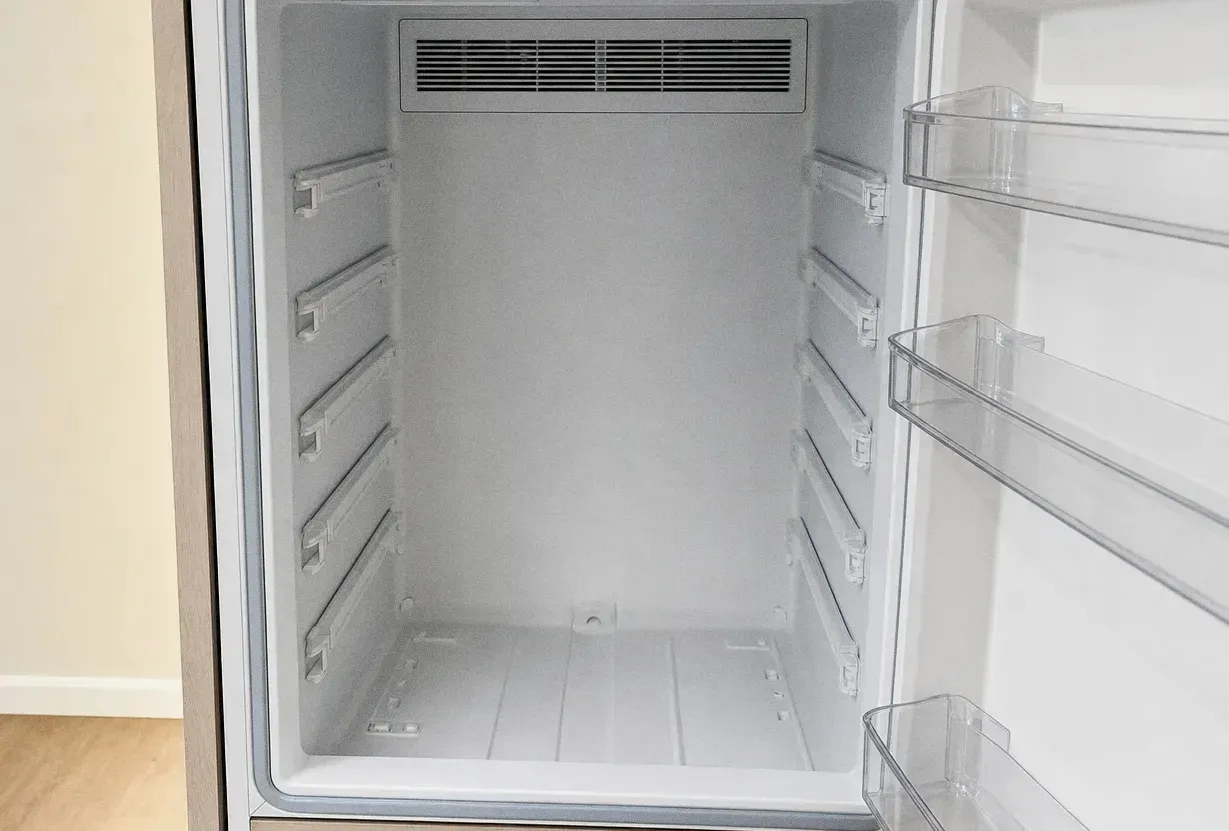
A comparable new Viking built-in refrigerator typically costs $6,640–$11,790 for the appliance alone, and that figure leaves out panels, delivery, hauling the old unit away and the work of fitting the new one into cabinetry. If you are asking because the one in your kitchen has stopped cooling, the more useful number is the repair: a fan or defrost fault typically runs $290–$690, a control board or touch panel $380–$940, and a compressor or sealed-system repair, the costliest job a refrigerator can need, typically $1,090–$2,630. Each of those starts with a $95 visit in which the technician tracks down the fault; you see a firm price before any work begins, and the $95 goes toward the repair if you go ahead.
Cambridge adds one practical wrinkle. Plenty of condominiums here were carved out of older two- and three-family houses, where the stairs turn tight and the kitchen doorway was never sized for a 36-inch built-in, so swapping a refrigerator is rarely just a delivery.
What the price tag on a new Viking covers
Viking sells its full-size refrigeration in a few families, and the price tracks the family. The built-in line is named by prefix in Viking’s documentation: VCBB for bottom-freezer models, VCSB for side-by-side, VCRB for all-refrigerator columns and VCFB for all-freezer columns, with FDBB, FDSB, FDRB and FDFB as the Custom Panel versions that take a front matched to your cabinets. Above those sits the VEIL Integrated line, which includes FDREIC all-refrigerators, FDFZIC freezer columns, the FDBMIC7360 bottom-freezer and FDWCIC wine cellars; its Double Pivot Hinge lets the doors sit almost flush with the surrounding millwork.
The engineering differs too. A 5 Series built-in runs on one variable-speed compressor with Viking’s ProChill system, while a 7 Series uses two, so the fresh-food and freezer sides each have their own. Viking says both hold within 1° of the set temperature. If you are weighing those two, our comparison of the 5 Series and 7 Series goes through the build and parts differences.
What the appliance price leaves out is the installation. A custom panel model needs panels made and hung. An integrated FDREIC column needs its own 115 volt, 15 amp dedicated circuit and a 1/4-inch copper water line supplying 20 to 120 psi, and older kitchens do not always have either in the right spot.
Where the money in a repair actually goes
A repair bill has three parts, and knowing which one is large tells you a lot about the job.
Finding the fault
Warm food has several possible causes, and on a built-in they overlap. A fan that has quit, an evaporator choked with frost, a sensor reading wrong and a slow refrigerant leak can all look the same from the kitchen. The diagnosis visit is where those get separated, using temperature readings, fan and defrost tests and a look at the sealed system. That is why it is priced as its own flat step.
The part
Fans, defrost heaters, thermostats and sensors are modest parts. Control boards and touch panels cost more. Compressors, evaporators and condensers sit at the top, which is the main reason sealed-system work lands in the highest band. Age matters as well. Several 7 Series integrated units are no longer current: Viking’s library now marks the VBI7360W and FBI7360W bottom-freezer columns, the VFI7240W and VFI7180W freezer columns and the VRI7240W as retired, and on a retired model a less common part can take longer to track down.
Time and access
A built-in’s machinery lives in a compartment above or below the cabinet, behind a grille, and the unit is boxed in by cabinetry on three sides. A fan swap is quick once the panel is off. A defrost fault often means letting the evaporator thaw before it can be tested properly. Sealed-system work takes longest: the leak or failed component has to be found, the system opened and brazed, then evacuated and recharged, and that labor is what moves the bill into the top band.
Typical repair ranges by symptom
| What you notice | Usual cause | Typical range |
|---|---|---|
| Fresh-food side warm, freezer still cold | Evaporator fan or defrost system | $290–$690 |
| Dark display, dead buttons or settings that will not hold | Control board or touch panel | $380–$940 |
| Both sections warming, compressor running nonstop or not at all | Compressor or sealed system | $1,090–$2,630 |
These are typical ranges for Greater Boston; the firm figure for your unit comes after the diagnosis. Some display alerts cost nothing more than a part you can fit yourself. On a 7 Series VRI all-refrigerator, a Bluezone strip on the display means the bulb is due, using kit RBZB7, and holding the refrigerator selector key for 3 seconds afterward clears it. On 7 Series integrated units the water filter is RWFDISP, which comes out with a quarter turn counterclockwise at the bottom right behind the door; the FDREIC takes RWFIC instead.
Read the warranty before paying for sealed-system work
The biggest repair is also the one Viking’s warranty treats most generously. On integrated, built-in and freestanding Viking refrigeration, the sealed system, meaning the compressor, evaporator, condenser, connecting tubing and dryer/strainer, has parts and labor coverage in years 3 to 6 and parts-only coverage in years 7 to 12. A compressor failure in year 9 may therefore leave you paying for labor but not for the compressor itself, which shifts the repair-or-replace sums a long way. Undercounter units and wine refrigeration are the exception: their sealed-system coverage runs from year 3 through year 6 and stops there.
Coverage depends on the exact unit, so find its rating plate first. A 5 Series keeps it high on an interior wall of the fresh-food section, tucked behind the lighting. The integrated FDREIC, FDFZIC and FDBMIC7360 carry their product plate inside the refrigerator compartment, on the side across from where the door swings open. If your unit falls inside one of those coverage windows, contact Viking about how a claim is handled before you book any repair.
Repair or replace
For most faults the arithmetic is lopsided. Even the top of the sealed-system band sits well under the low end of what a comparable new unit costs, and a replacement still has to fit the same opening, match your panels and make it up the stairs. Replacement starts to make sense when the cabinet itself is worn out, when door seals, hinges and shelves are all tired at once, when the unit has needed several major repairs in a short span, or when a sealed-system failure lands outside warranty on a refrigerator you were already planning to change.
A few questions help: how old is it, has the sealed system been opened before, does the cabinet still seal and look right, and are you renovating soon anyway? Straight answers to those usually settle it faster than any rule of thumb.
Before you call
Write down the model and serial number, what the display shows and when the problem started. If a 5 Series shows oPn or Shr, the temperature sensor alarm is what fired. Clear it with ALARM OFF; when the readout still will not return to a temperature, Viking tells owners to call for service immediately rather than wait. On 7 Series integrated models, a High Temperature Alarm flashes the display, and pressing ALARM silences the tone while the flashing carries on until the temperature recovers; after a long power outage, an indicator stays on the screen until you press any key. Move the most perishable food to a cooler and keep the doors shut.
When you are ready, call (508) 401-8451 to book Viking refrigerator repair in Huron Village, Porter Square, East Cambridge or Cambridgeport.
Also asked
Is a Viking refrigerator worth it?
For owners who want cold storage that disappears into the cabinetry and keeps a tight temperature, yes; Viking says its built-in models stay within 1° of the setting. Long-term value comes down to upkeep and repair, and most faults are fixed for a small share of what a comparable new unit costs.
Why are Viking refrigerators so expensive?
Mostly because they are built-in appliances rather than freestanding boxes. They are sized to sit inside cabinetry, many take custom panels, and 7 Series models carry two compressors so the fresh-food and freezer sections run independently. Installation, panels and wiring add to the cost of the appliance itself.
How long does a Viking refrigerator last?
Viking does not publish a lifespan, but the warranty shows how long it expects the core to hold up: on built-in, integrated and freestanding models the sealed system has parts coverage through year 12. Clean condenser coils, sound door gaskets and regular filter changes are what keep one going past that.
What are common problems with Viking refrigerators?
The usual faults are the ones any built-in develops: a warm fresh-food section from a failed evaporator fan or a defrost system that has stopped clearing frost, worn door gaskets, control board or touch panel failures and, less often, a sealed-system leak or a tired compressor. On a 5 Series, oPn or Shr on the display points to a temperature sensor alarm.
What does it cost to have a Viking refrigerator diagnosed?
A flat $95 pays for the visit and a complete diagnosis of the fault. If you decide to go ahead with the repair, that $95 is credited toward the bill, and you get the firm repair price after the technician has found the cause rather than as a guess over the phone.