· Range Repair
Viking 5 Series vs 7 Series: Burners, Build, Parts and Repair
The Viking 7 Series is the top tier, with a stronger top burner, Viking's Elevation burner design and more oven refinement, while the 5 Series is the classic Professional line with a simpler, proven layout. Both are repairable; choose on how you cook.
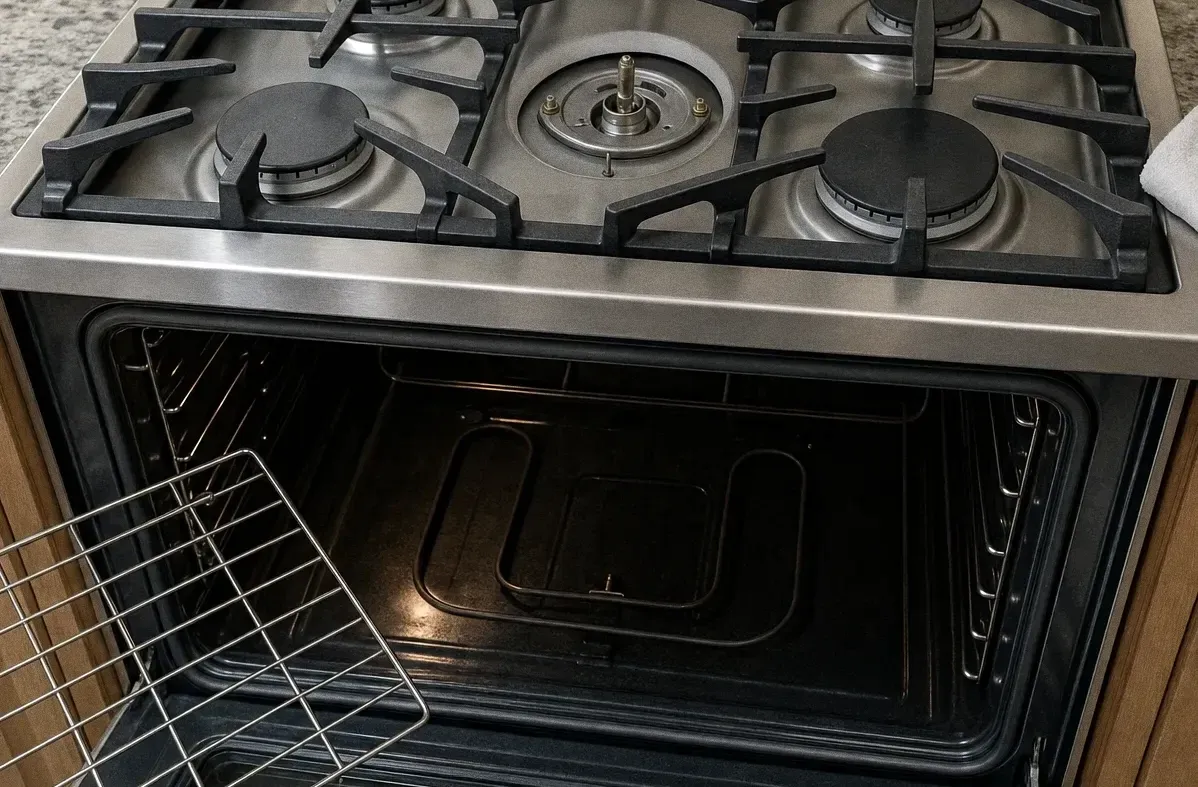
The short answer: the Viking 7 Series is the top tier of the range line, with a stronger top burner, a newer burner design Viking calls Elevation burners, and more refinement in the oven, while the 5 Series is the core Professional line, with sealed burners, a low simmer setting and a simpler layout. Both cook well and both are repairable. The gap is less about quality than about how hard you cook, what you want to spend up front, and how many extra parts you are willing to own. For a sense of running costs, replacing a worn igniter or burner assembly on either tier typically falls in the $290–$650 range, with the firm price given once the fault is diagnosed.
That matters more than usual in Cambridge, where many of these ranges sit in older multi-family houses and condo conversions whose kitchens were never laid out for a 36- or 48-inch appliance. Width, hood venting and the gas line often settle the question before any feature list does.
How the Viking tiers line up
Viking groups most of its current cooking and refrigeration into numbered series. The 3 Series is the entry point: the familiar stainless, pro-style look with fewer features and a lower price. The 5 Series is the long-running Professional line that most people picture when they hear the name, with heavy grates, big knobs and commercial styling. The 7 Series sits above it and is where Viking puts its newest burner and oven ideas.
The numbers describe the tier, not the size. Each series comes in several widths, and a 36-inch 5 Series and a 36-inch 7 Series need roughly the same space, the same kind of gas supply and a hood of similar capacity. If a listing for a used range, or the paperwork left behind in a house, does not say which series it is, ask for the model and serial numbers from the rating plate. Those two numbers settle the tier, the age and, later on, which parts fit.
Construction and cooking design, side by side
On the cooktop, the 5 Series uses sealed burners: the burner base is closed off from the inside of the range, so a boilover stays on top where you can wipe it up instead of running down into the burner box. A simmer setting lets the flame drop low enough to hold a sauce without scorching it. For everyday cooking, braising and baking, that setup does everything most households ask of it.
The 7 Series keeps the sealed approach but reworks the burner itself, with Elevation burners intended to make cleaning around them easier, and it adds a higher-output burner for searing, stir-frying and bringing a big pot of water up to a boil quickly. If you cook on high heat often, that is the difference you will feel every week. If you mostly simmer and bake, you may never notice it.
In the oven, both tiers offer convection. The 7 Series leans further into airflow and preheat speed, and its controls tend to be more refined. Both use heavy, well-insulated doors, which is one reason door hinges and springs are a regular repair on pro-style ovens of every brand rather than a weakness of one series.
What tends to wear out on each
The repair patterns are similar, because the two tiers are built from the same kinds of parts. On a gas top, igniters and the spark module are the usual suspects: an igniter can crack or get soaked by a spill, and a module can keep clicking after the burner has already lit. If you are hearing that click with no flame, our walkthrough on a Viking burner that clicks but will not light covers what to check yourself first. Burner ports also clog with food and grease and need clearing.
In the oven, the bake igniter on a gas model weakens with age until it can no longer open the gas valve, and thermostats or temperature sensors drift so the oven runs hot or cold. Convection fan motors wear and start to hum or rattle. An oven thermostat or heating element typically runs $230–$810, depending on the part and the model.
The higher tier carries a little more electronics, and every extra control is one more thing that can fail. A control board or touch panel typically runs $380–$940. That is not a reason to avoid the 7 Series; it is a reason to know what you are buying. Our range repair page covers burner, igniter and oven faults on both tiers.
Refrigerators and dishwashers in the same lineup
Viking also sells built-in refrigeration under the series names, and the same logic holds in rough terms. The higher tier adds features and finish, while the cooling hardware, meaning a compressor, fans, a defrost system and a sealed refrigerant loop, works the same way in either. Fan and defrost faults are the common problems, and fixing one typically runs $290–$690. A compressor or sealed-system repair is a much bigger job, typically $1,090–$2,630, and that is usually the point where the repair-or-replace question comes up. Our refrigerator repair page describes the symptoms worth acting on early.
Viking dishwashers wear the way most dishwashers do, through drain and wash pumps, inlet valves, float switches and door latches. A pump or control repair typically runs $310–$1,240.
Parts, service and the other comparisons
Parts are the quiet half of this decision. Many parts on the 5 and 7 Series are the same type, but they are not always interchangeable, so order by model and serial number rather than by series name. Factory-approved parts matter on these appliances, because a burner orifice or igniter that is close but not exact can light poorly or not at all.
Viking Repair Cambridge is an independent repair shop that handles both tiers in Huron Village, Porter Square, East Cambridge and Cambridgeport. Booking a visit is a flat $95, and for that the technician tracks the fault down rather than just looking; say yes to the work and that $95 counts toward it. Call (508) 401-8451 to book.
If you are weighing the 3 Series against the 5 Series, the question is mostly about features: the 3 Series gives you the look and solid cooking at a lower price, with fewer extras to maintain. If ZLINE or another value-priced pro-style brand is on your list, ask the same questions you would ask of Viking: how easy are parts to find, how long does the maker keep supporting a model, and can an independent technician get the service information. The showroom price is only part of what a range costs to own.
Repair or replace, and which one to buy
A comparable new Viking unit, appliance only, costs far more than any single-part repair listed above, and installation comes on top. Set against that, most single-part repairs on either tier sit well inside the bands above, so a working 5 or 7 Series with one failed igniter, element or board is usually worth fixing. The harder call is a refrigerator that needs sealed-system work, or a range with several worn parts at once; then the age of the unit and the cost of the job should be weighed side by side.
For buying, keep it simple. Choose the 7 Series if you sear, wok-fry or boil large pots often and want the newest burner and oven features. Choose the 5 Series if you mostly bake, braise and simmer, and would rather put the difference toward a proper hood or the gas work your kitchen may need. Either one, kept clean and looked after, will stay serviceable for a long time.
Also asked
Is the Viking 7 Series worth the extra cost over the 5 Series?
It is worth it if you cook on high heat often and want the stronger top burner and the newer oven features. For baking, braising and everyday cooking, the 5 Series does the same work, and the money saved can go toward a good hood or the gas line your kitchen may need.
Do Viking 5 Series and 7 Series ranges share parts?
Some parts are the same type, but you should not assume they swap between tiers. Igniters, burner heads, elements and boards are matched to the model, so order by the model and serial number on the rating plate rather than by the series name.
How is the Viking 3 Series different from the 5 Series?
The 3 Series is the entry tier, with the pro-style look and fewer features at a lower price. The 5 Series adds more of the Professional line's cooking features. Both are built from the same kinds of service parts, so their repairs follow similar patterns.
Can an independent technician repair a Viking 7 Series range?
Yes, with the right parts and the model's service information. Viking Repair Cambridge is an independent shop and fixes both tiers with factory-approved parts. The $95 visit fee covers finding the fault and is folded into the repair when you approve it.
Viking or ZLINE: which is easier to keep running?
That depends more on parts support than on the badge. Before you buy either one, ask how quickly parts arrive, how long the maker keeps supporting a model, and whether local independent technicians can get the service information for it.